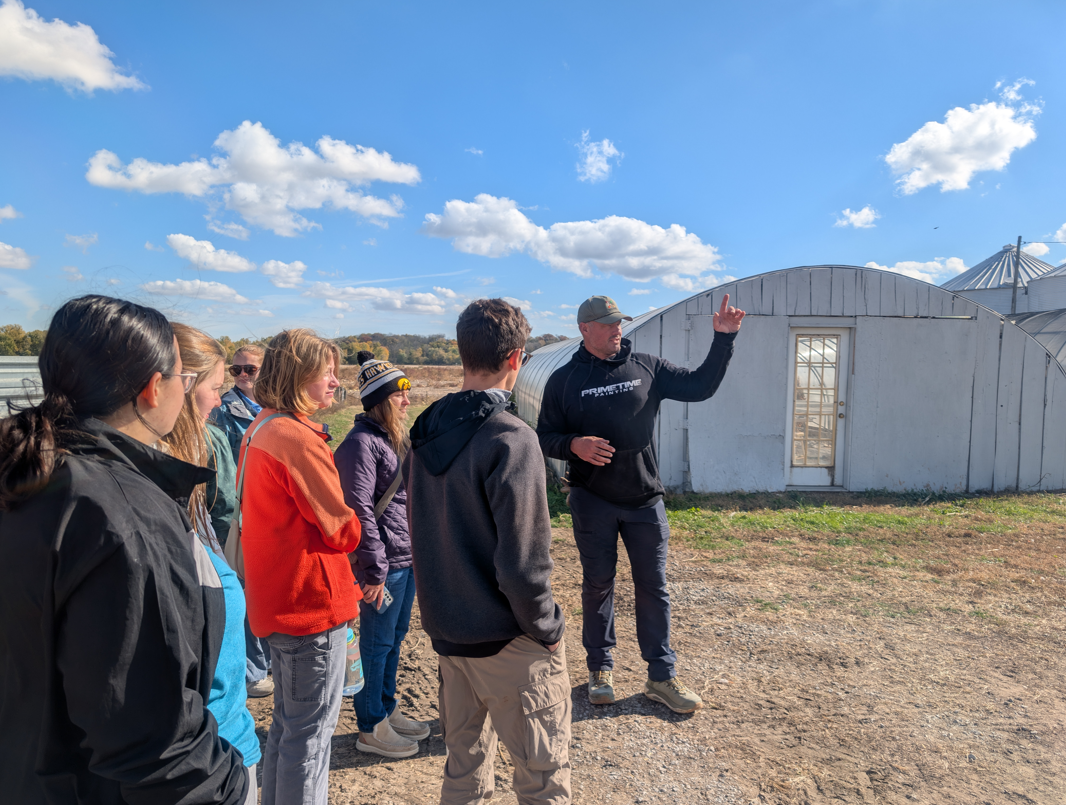
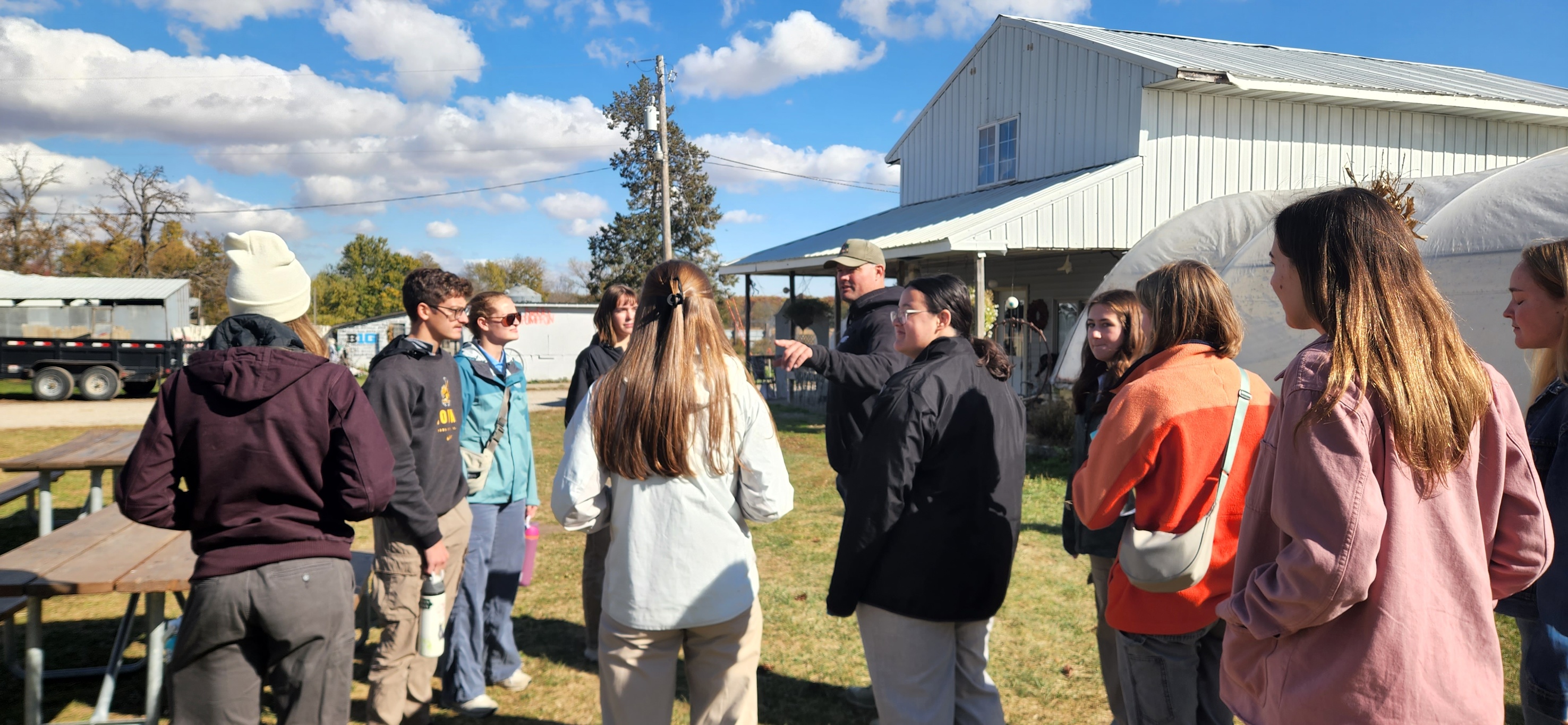
As the fall semester wrapped up, I joined fellow University of Iowa students for a hands-on visit to Kroul Farms in Mount Vernon, Iowa. Our guide was Matt Kroul, a former Hawkeye football player and now farmer, whose family has stewarded this land since 1946. Today, Kroul Farms blends tradition with innovation, adopting regenerative agriculture practices to improve soil and water health, boost long-term crop productivity, and reduce erosion. Spanning 1,250 acres of row crops, pumpkins, timber, produce, flowers, and pasture, the farm also operates a bustling marketplace for seasonal goods, making it a cornerstone of the local community. For many of us, this was the first time seeing regenerative practices in action, and it sparked conversations about how these methods could shape the future of agriculture in Iowa.
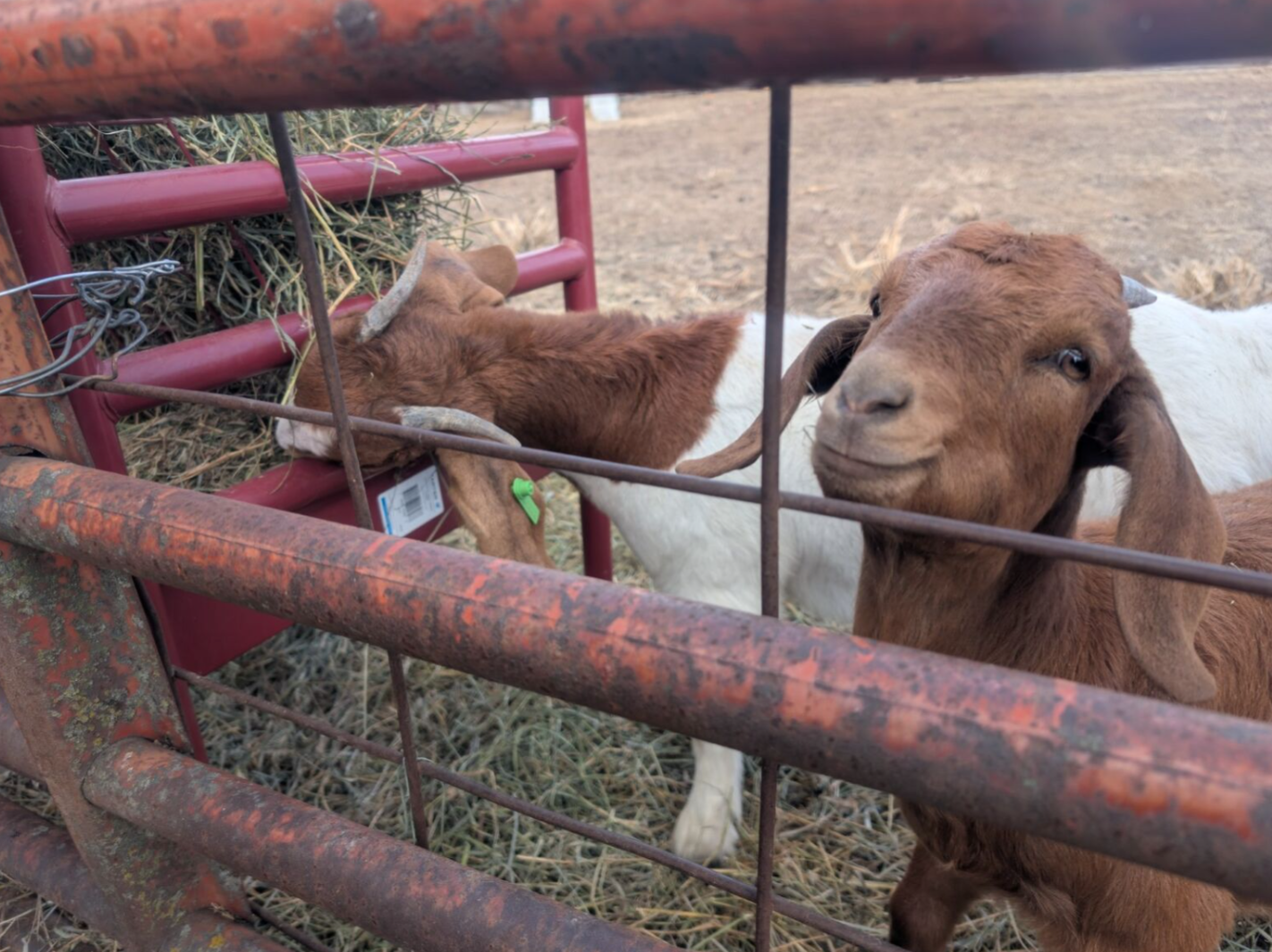
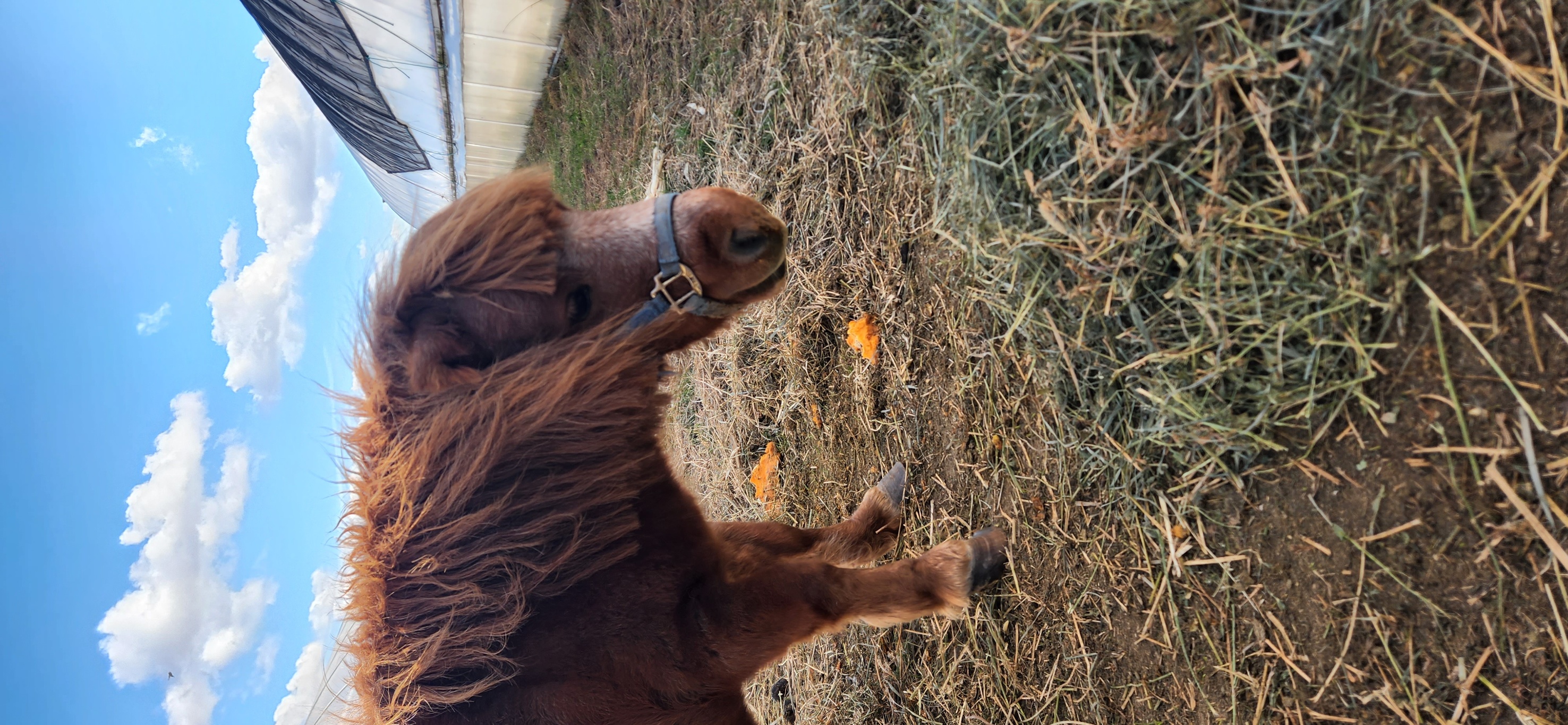
When we arrived at the farm, we were greeted by Matt, who warned us that the tours are usually geared towards kindergarteners. It was safe to say that our group of 20-somethings had the fascinations of a five-year old, racing towards the miniature horse, Oakley, and the goat pen. Students laughed and snapped photos, clearly enjoying the playful side of farm life before diving into the more technical aspects of agriculture. In his featured episode of Barn Talk, a podcast about the agricultural business world, Kroul says they try to run the “fine line between mini amusement park and farm,” with the goal of exposing families – for free – to a diversified farm. They have also embraced their highway-side location, which offers great visibility to those driving by and gives easy access to school busses taking field trips to the farm.
Most visitors who arrive in the fall to purchase pumpkins, find their way through the corn maze and explore the festive decorations created out of stacked hay bales and squashes. The pumpkins are also sold to local grocery stores, including HyVee, which reduces the need to ship the popular Halloween gourd across the country. The Krouls even worked with local engineers to make a homemade conveyor-belt contraption that washes the dirty pumpkins off and gets them to jack-o-lantern enthusiasts sooner!
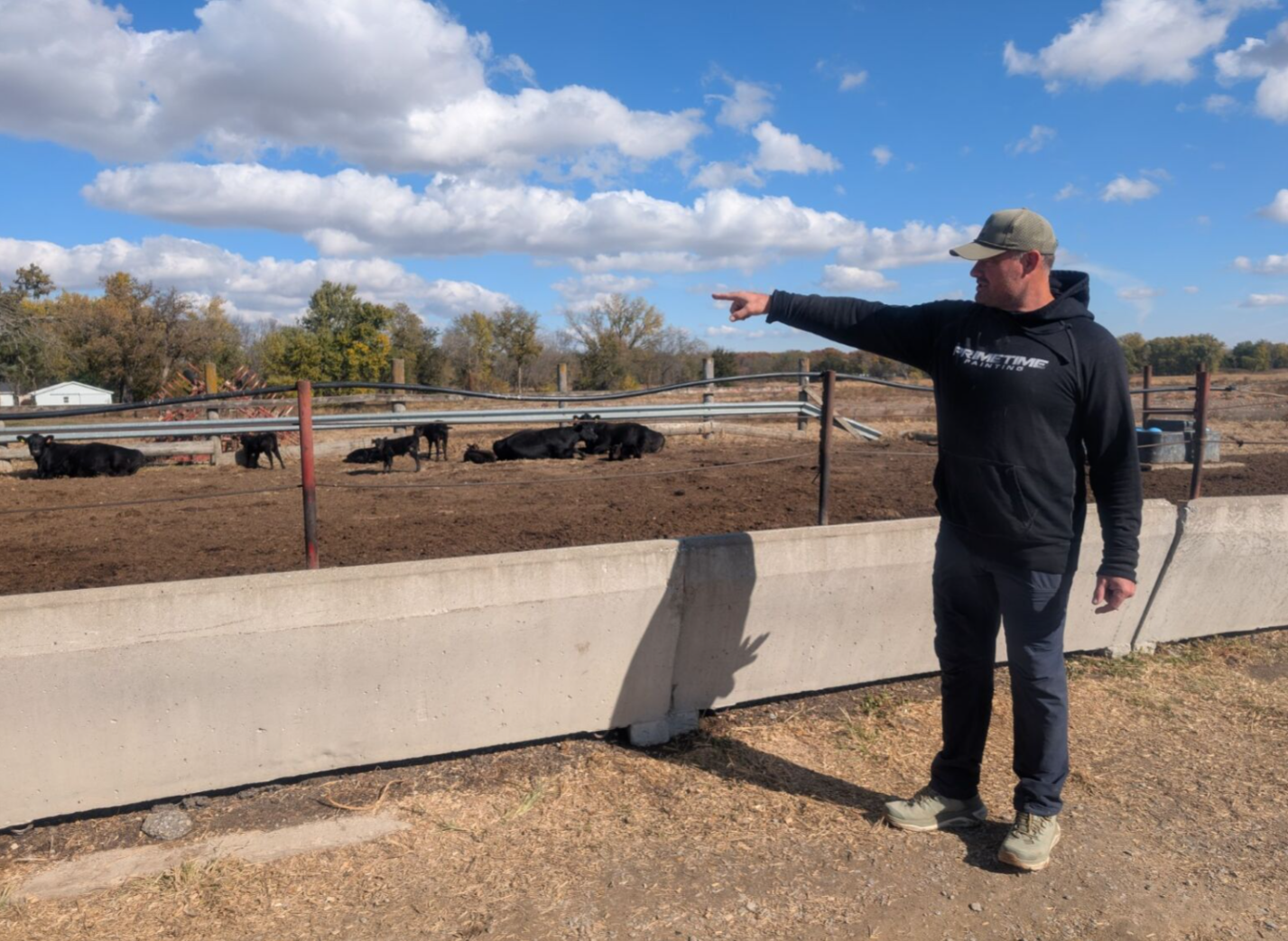
Next door to the goats were the heifers, who were nursing their calves when we arrived. They had recently been munching on pumpkins in the patch - a delicious fall snack. Beyond are cattle paddocks, of which the farm has three, 80-160 acres each. These pastures are fertilized by cow manure and rotationally grazed to improve soil health and carbon sequestration capacity. The resting periods between grazing allow plant roots to extend deeper into the soil and vegetation to regrow, reducing erosion and runoff - especially important given the Cedar River running adjacent to the farm.
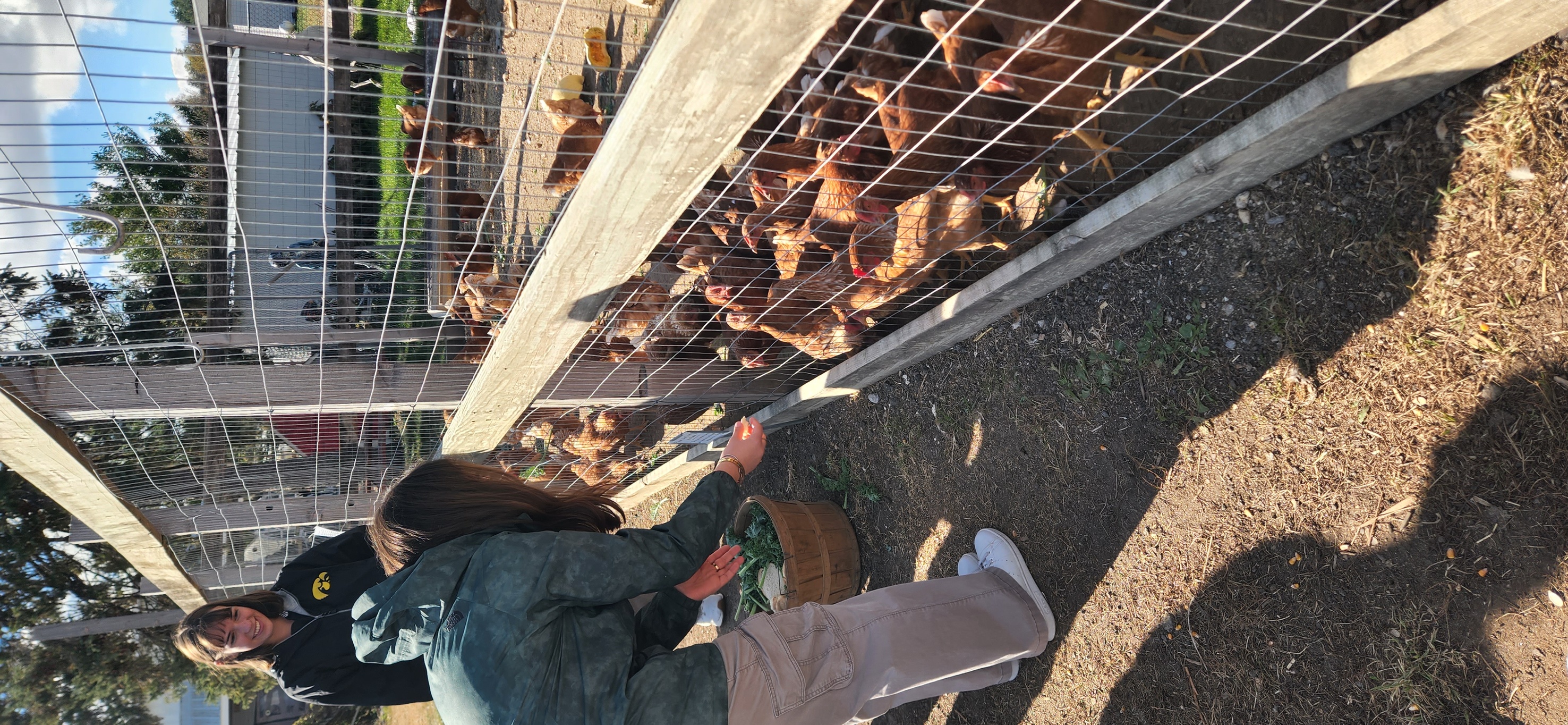
You can’t miss the chickens and guinea fowl running around, as much an educational aspect of the farm as business. Matt highlights how Midwest farmers contribute to the food system, using their egg-laying hens as an example. The Krouls, specifically, are knowledgeable of and involve themselves in many sectors. This allows them to feed the community while still profiting as markets fluctuate. Several students remarked that the visit gave them a deeper appreciation for the complexities farmers navigate and how interconnected every aspect of farm operations truly is.
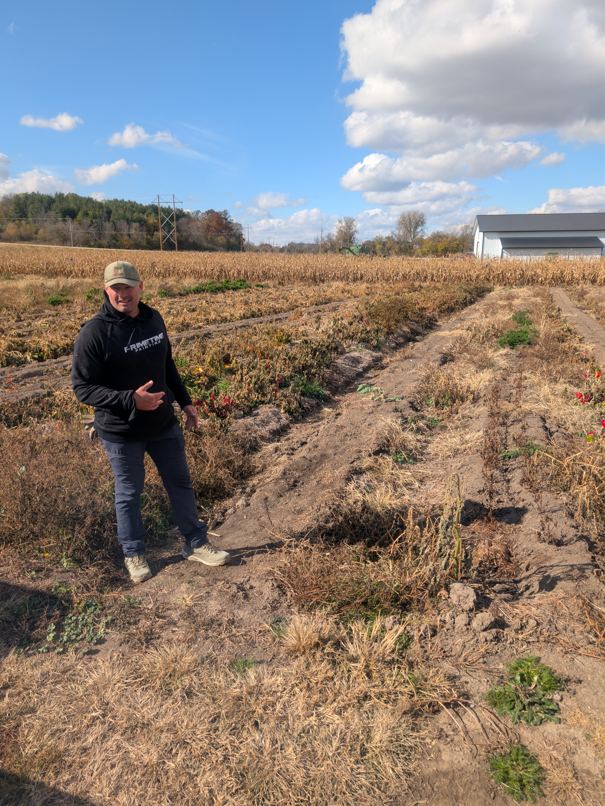
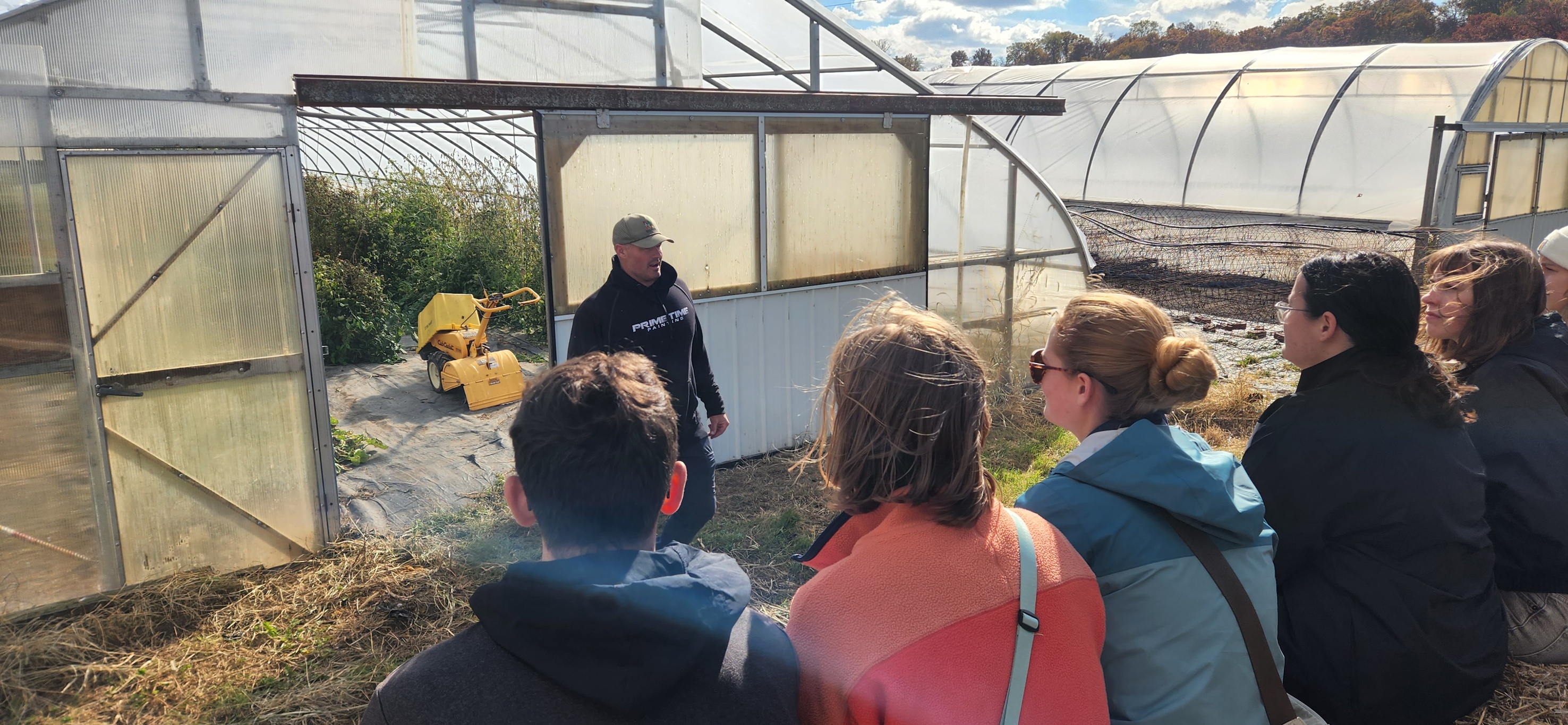
We hop on the trailer pulled by a John Deere tractor and head on over to their 5-acre garden, which hosts everything from radishes and lettuce to zucchini and Swiss chard. The garden feeds their Community Supported Agriculture program, which allows families to purchase a subscription for weekly home delivery of local produce for 16 weeks throughout the growing season. Each week, a blog post describes the growing conditions, the yield, and recipes for that week's harvest. Though the garden was past its prime when we visited, Matt described the no-till approach used on that area and on the surrounding acres of row crops to reduce soil disturbance and erosion. Oftentimes, areas that no-till use more herbicide, but Matt assured us that cover crops are planted to protect and return nutrients to the soil during the off-season.
One of the most non-traditional niches that the Krouls have found success in is timber sales. Producing up to 24,000 pounds of wood per day, timber is now 8% of their annual revenue. They mainly harvest dead ash trees from the wooded areas on the perimeter of the farm. In recent years, ash trees have been heavily damaged and killed by the emerald ash borer, an invasive beetle. The Krouls make the best of a bad situation, selling firewood and carpentry wood to restaurants, grocery stores, contractors, and customers right off the farm lot.
It is clear that the Krouls refuse to put themselves in just one box. However, their diversity is intentional: the Krouls have experimented with different markets over the years - including Christmas trees - and have chosen what works best for them. They have created a farm that is not only efficient and productive, but serves the community, is resilient, and considers the environment in every decision. For students, this visit was more than a tour—it was a lesson in innovation, sustainability, and the importance of community in agriculture. Many left inspired to think differently about farming and its role in addressing environmental challenges. Kroul Farms stands as a powerful example of how Iowa farmers can build resilient, community-focused operations while prioritizing land stewardship that will keep the farm productive for generations to come.