We often think about paper being a house for portraits and sketches to live in, a surface to hold history or grocery lists – but the paper itself is art, too. This belief is held true in Japan, where kozo trees have been a staple in papermaking for thousands of years. The University of Iowa Center for the Book keeps both the plant and the art alive, gathering annually in November at the Oakdale Research Park to harvest and process the trees for paper. From bookbinding and letterpress printing to book design and calligraphy, UICB trains individuals in book arts in the Kolarik Book studio, a workspace nook in the basement of North Hall.
The kozo garden was founded by Tim Barrett, professor emeritus and former director of UICB, when he brought the plant over from Japan 30 years ago. He had been studying papermaking in the country under a Fullbright Fellowship at the time but switched his focus to Eastern European papermaking and handed the responsibilities over to Nick Cladis, the professor who I had the opportunity to meet and learn from. Since 2020, the kozo yield has doubled, along with the supply of kozo paper available for students to use in their projects.
Upon arrival to the kozo garden, I was handed a machete with which to cut down the trees. The trunks are thin, only an inch or two in diameter, and the blade cuts through the base like butter. They reproduce by rhizomes and sprout in late April or early May, presenting themselves as small, fern-like shoots. By November, some are over seven feet tall. They are not as thick as they might be in Japan, as a result of our cold winters, but the growth is possible because the overall conditions in the two places are similar. Throughout the summer, dedicated graduate students will tend to the trees, weeding and removing auxiliary branches to direct resources up the main trunk and to ensure the bark remains connected after it is peeled off during processing.
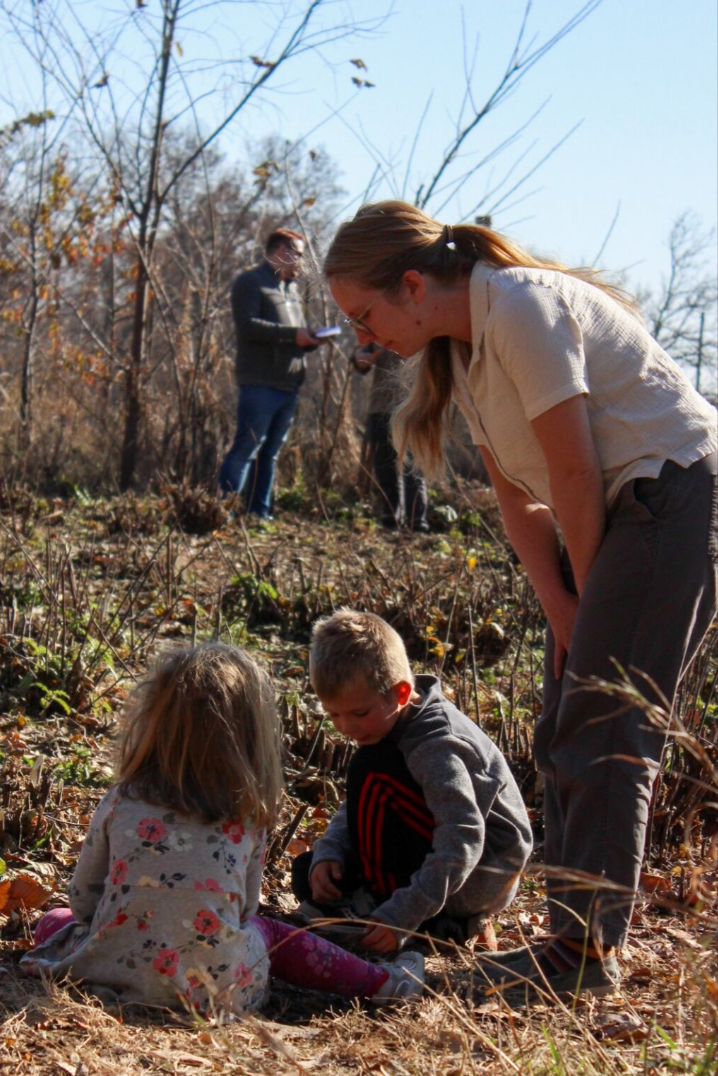
As we piled the felled trees, trimmed them in half, and bundled them together, I asked around to see what brought them to the harvest that day. I expected most to be MFA students, but many were drawn for other reasons. I met Carol, a woman who had studied papermaking in Japan for fifteen years. She had learned every part of the process, except for the harvest. Now, she said, she was learning the “beginning at the end.” There was a mother who had recently moved to Iowa City with her two young children, who were curious about the world and how things work – and what better way to learn about the paper they doodle on than to make it themselves? Even a prospective student and their mother were there, building relationships with faculty and peers. From the get-go, I saw how much of a community event it really was, bringing people with common passion or simply intrigue together in a creative setting.
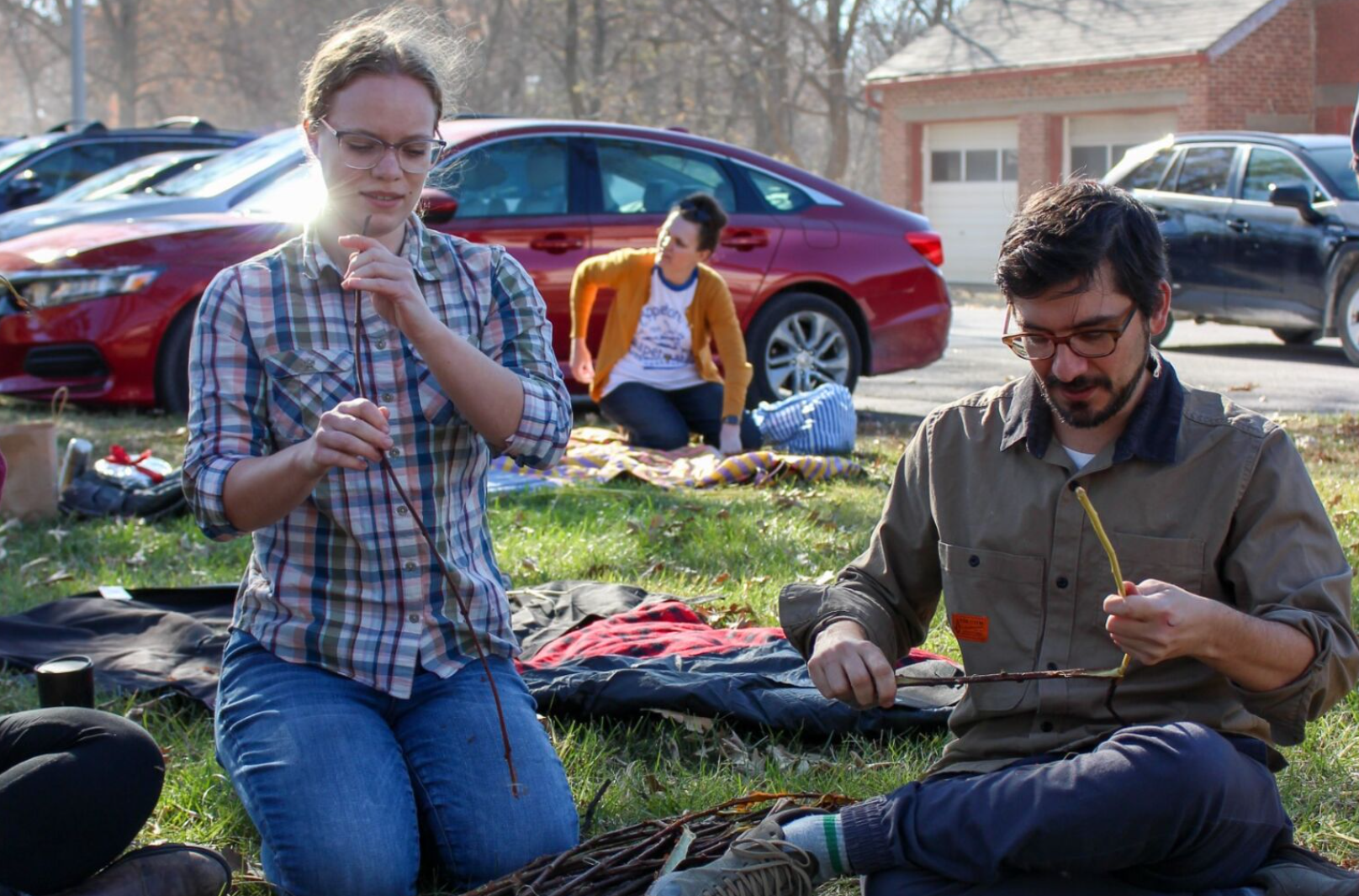
We were only just getting started: we lugged our harvest inside the UICB Paper Research and Production Facility to begin processing the bark. The bundled kozo went straight into huge vats of water to be steamed; this loosens the outer bark from the hollow pith. We then relaxed outside on the grass and began to strip the bark. I learned how to pull the bark perpendicular to the stem rather than straight down to avoid tearing the fibers and neatly piled them together. The whole tree is used, from the leaves that are notched down and composted, to the pith that is dried and burnt to ash, then spread on the garden as fertilizer.
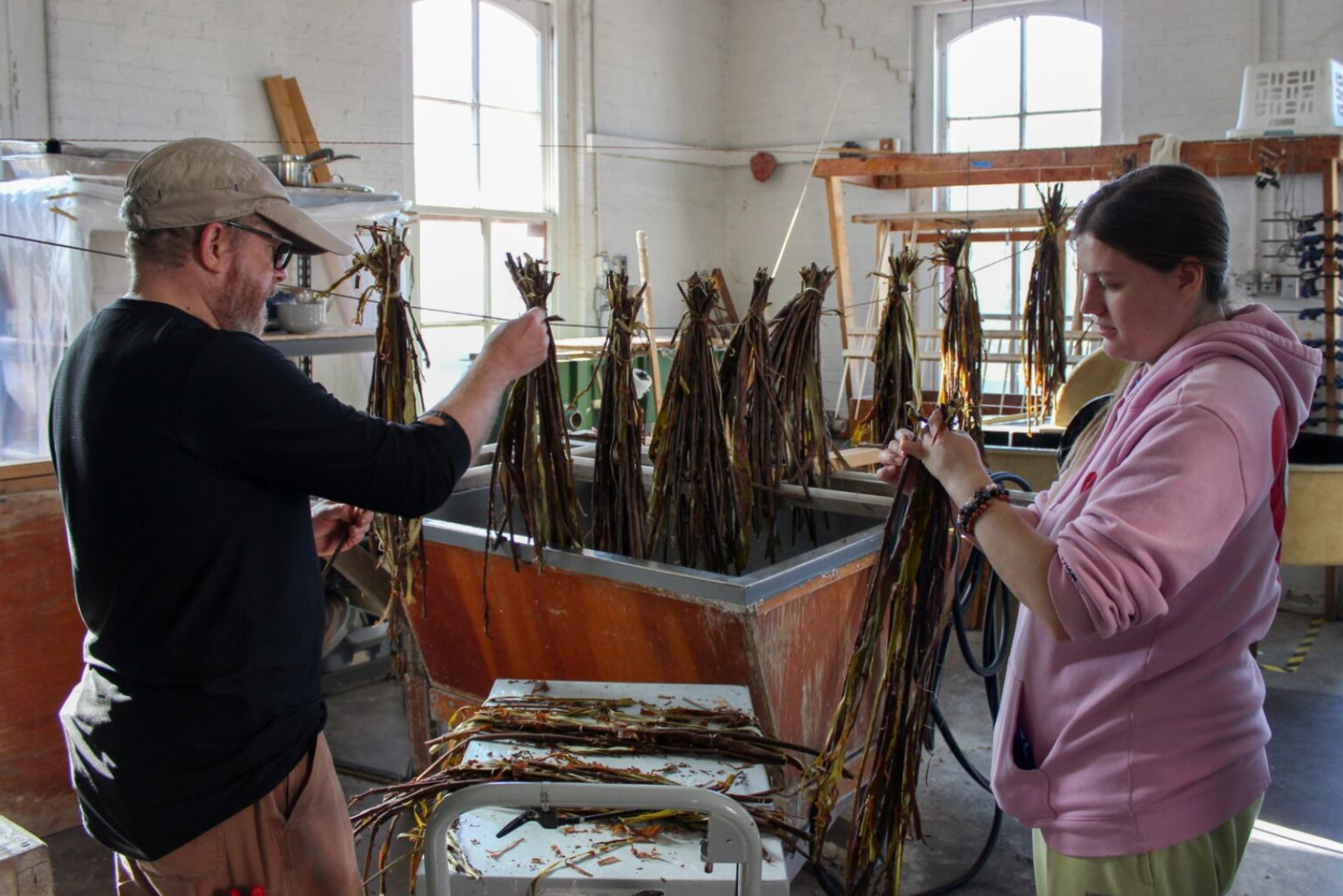
The final step of processing includes bunching the bark strips together until it fits snugly in between your thumb and pointer finger, tying the strips together, and hanging them on a clothesline to dry. After this, the brown, outer bark will be removed, and the green middle and white inner layer will be used for papermaking. Of course, a break was taken to enjoy traditional, homemade Japanese curry, further bringing our group together in community.
Kozo paper is often used for book conservation, as many of its properties predispose it to this purpose. It has long fibers, about 1 centimeter, making it strong and durable, and is pH neutral, meaning it is free of acidic components that could break down the repaired paper over time. However, Nick Cladis likes to take a different approach, encouraging students to use the paper for art instead. He points out that it has good wet strength, so it retains dye well, and is pliable, so it can be used for structural art installations. A book of homemade kozo paper in the studio shows that the paper is diverse and can be thick, textured, painted, and decorative – it is not always the thin and transparent paper that is traditionally associated with Japanese culture. In fact, each region often has its own style and design.
Aside from the kozo, UICB encourages the use of alternative raw materials in papermaking. Field trips are often taken to collect materials, including to a hemp farm near the Amana Colonies, the Land Alliance Folk School in Oxford, Iowa, and Public Space One in Iowa City. The materials are responsibly harvested near the end of the growing season when insects are no longer using the plants for food or habitat, and they are replanted annually. By building relationships with local organizations and people, students learn about the conceptual ties that paper has to agriculture and industry beyond the physical craft of papermaking.
One of the dedicated papermakers told me, “Papermaking is a precious and valuable art. Like any passion, it captures your imagination.” Witnessing the kozo harvest demonstrated just how involved, intentional and collaborative the art is. In a world driven by urgency, it was refreshing to see the UICB community slow down to appreciate and understand the process from sprout to paper. Their emphasis on community engagement, respect for cultural tradition and responsible material sourcing sets a precedent for mindful practices that all sustainable students can implement in their own studies and passions.
*Undergraduate students can become involved in papermaking by taking an introductory book arts course as a full-time CLAS student, or look towards pursuing an MFA in the Book Arts, or Graduate Certificate in Book Arts and Book Studies.